Klonopin Addiction Treatment in Orange County, CA
Misuse of Klonopin can quickly lead to physical dependence and addiction, making it increasingly difficult to cope with anxiety, stress, or other underlying issues without the prescription medication. The resulting withdrawal symptoms, emotional instability, and disruptions to daily life can make recovery challenging without professional support.
At Laguna Shores Recovery in Dana Point, California, we offer comprehensive, evidence-based treatment for Klonopin addiction. Our treatment programs combine medically supervised detox to safely minimize withdrawal symptoms, residential care providing 24/7 support, individualized therapy tailored to each client’s needs, and dual diagnosis treatment to address co-occurring mental health conditions such as anxiety, depression, and PTSD.
Long-term recovery is supported through structured aftercare, including behavioral therapy, relapse prevention planning, holistic therapies, life skills training, and peer support through alumni networks. This integrated approach gives clients the guidance, tools, and resilience necessary to safely overcome Klonopin dependence and maintain lasting sobriety.
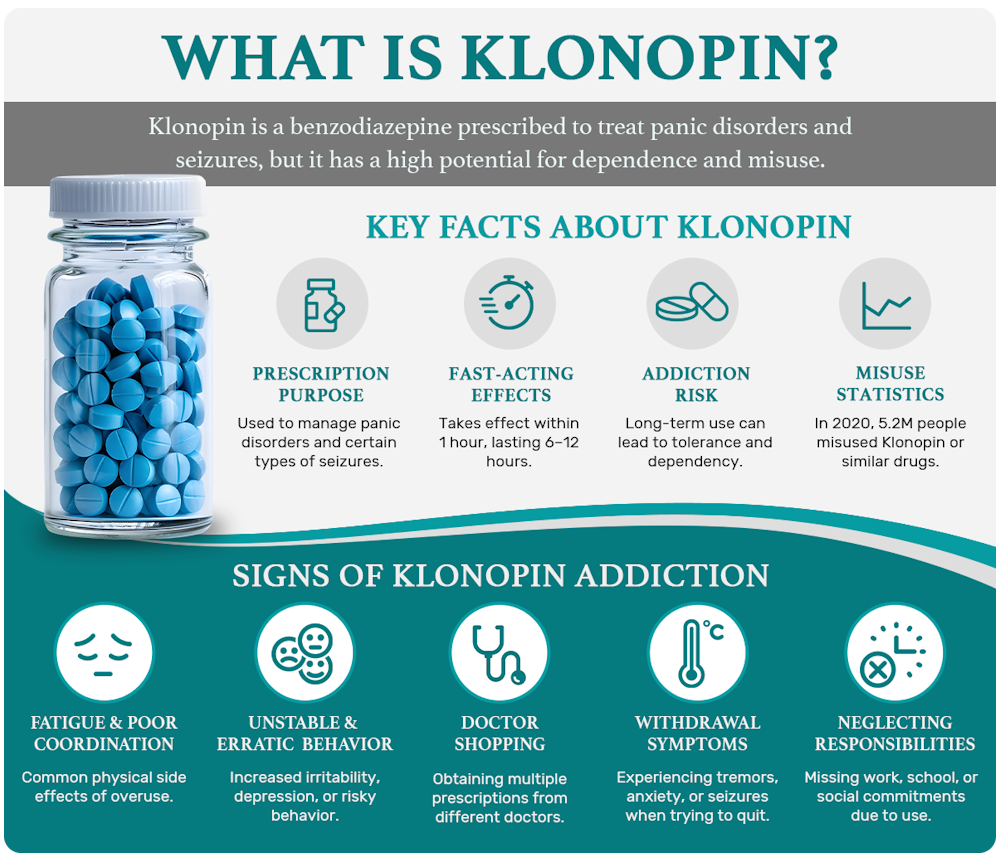
As Klonopin is a long-acting benzodiazepine that stays in the body longer than many similar medications, it can create temporary feelings of calm and relief that increase the risk of both physical dependence and psychological dependence. Over time, the brain may lose its ability to manage anxiety on its own without the drug. As tolerance develops, individuals may become increasingly reliant on Klonopin, making it difficult to stop taking it safely without professional medical supervision.
Why is Klonopin Addictive?
Dependence can occur even when Klonopin is taken exactly as directed. When misuse escalates, such as taking larger doses, using it more frequently, or combining it with alcohol or other substances, the risk of addiction, withdrawal symptoms, and long-term health consequences increases significantly.
Signs and Symptoms of Klonopin Abuse
Behavioral and psychological changes are also common. These may include taking higher doses than prescribed, using Klonopin more frequently, running out of medication early, or seeking prescriptions from multiple providers. Mood swings, irritability, emotional numbness, social withdrawal, and using Klonopin as a primary way to cope with stress or anxiety are additional warning signs. When use is reduced or stopped, withdrawal symptoms such as rebound anxiety, insomnia, agitation, tremors, and in severe cases seizures may occur, indicating a growing dependence and the need for professional substance abuse treatment.
Recognizing the signs of Klonopin misuse is an important step toward getting help. Symptoms may vary depending on dosage, duration of use, and whether other substances are involved.
- Drowsiness or excessive sedation
- Dizziness or poor coordination
- Slurred speech
- Memory impairment
- Headaches or nausea
- Slowed breathing
- Taking more Klonopin than prescribed
- Doctor shopping or running out of medication early
- Withdrawal from family, friends, or responsibilities
- Mood swings, irritability, or emotional numbness
- Using Klonopin to cope with stress rather than anxiety symptoms
Stopping Klonopin abruptly can be dangerous. Clonazepam withdrawal symptoms may include:
- Rebound anxiety or panic attacks
- Insomnia
- Tremors or muscle spasms
- Sweating and heart palpitations
- Irritability or agitation
- Seizures in severe cases
Medical supervision is essential when discontinuing Klonopin to reduce risks and ensure safety.
Side Effects of Klonopin Abuse
Short-Term Side Effects
Short-term misuse of Klonopin can cause drowsiness, dizziness, poor coordination, slowed reaction time, and impaired judgment. Individuals may experience memory lapses, confusion, mood swings, irritability, or emotional numbness. These effects increase the risk of accidents and make daily functioning more difficult.
Long-Term Side Effects
Long-term abuse can lead to tolerance, physical and psychological dependence, and severe withdrawal symptoms when use is reduced or stopped. Chronic misuse may result in lasting cognitive impairment, memory problems, emotional blunting, increased anxiety or depression, and difficulty managing stress without the medication. Professional treatment is essential to safely address both the immediate and long-term consequences of Klonopin abuse.
Understanding these effects is essential for recognizing the risks of Klonopin misuse and seeking professional treatment to ensure safety and support lasting recovery.
Risks of Klonopin Abuse
Misusing Klonopin can quickly interfere with normal physical and mental functioning. The medication slows activity in the central nervous system, which can affect alertness, coordination, and reaction time, making everyday tasks more difficult and increasing the likelihood of accidents or impaired judgment. Abusing this benzodiazepine also slows breathing and heart rate, particularly when combined with alcohol or other depressants, raising the risk of overdose.
When Klonopin is taken in higher doses or combined with other substances, these effects can intensify, highlighting the importance of medical oversight even during short-term use.
- Excessive drowsiness or sedation
- Dizziness and impaired balance or coordination
- Slurred speech and slowed reaction time
- Confusion, poor judgment, and memory problems
- Increased risk of falls, accidents, or driving impairment
- Slowed breathing and heart rate, especially when combined with alcohol or opioids
- Mood changes, irritability, or emotional numbness
- Rebound anxiety or agitation between doses
Short-term klonopin misuse may also impact memory and concentration, while changes in mood or emotional responsiveness can strain relationships and daily responsibilities. These Klonopin addiction signs signal the need for early intervention and professional medical guidance.
Prolonged Klonopin misuse increases the risk of physical dependence and dangerous withdrawal symptoms, including seizures when use is reduced or stopped abruptly. There is also a heightened risk of overdose, especially when Klonopin is combined with alcohol, opioids, or other central nervous system depressants. Over time, reliance on Klonopin can interfere with relationships, work performance, and overall quality of life, making professional clonazepam addiction treatment essential for safe recovery. Long-term risks include:
- Cognitive impairment and memory problems
- Increased anxiety or depression over time
- Emotional blunting and reduced motivation
- Increased risk of overdose, especially when combined with alcohol or opioids
- Difficulty regulating stress without medication
Without treatment, these risk factors often worsen, making recovery more challenging the longer use continues.
Klonopin Addiction Treatment at Laguna Shores Recovery
Medical detox and medication-assisted treatment (MAT) taper help clients safely eliminate Klonopin from their system while managing withdrawal symptoms. Our medical team closely monitors vital signs, comfort levels, and mental health throughout detox to reduce complications and stabilize clients for the next phase of care.
Residential treatment provides 24/7 support in a structured, healing environment for people struggling with clonazepam addiction. Clients participate in individual therapy, group therapy, and wellness-focused activities while receiving continuous clinical oversight. This level of care is ideal for individuals who need intensive support and separation from daily triggers.
Many people who misuse Klonopin struggle with anxiety disorders, panic disorder, PTSD, depression, or trauma. Treating mental health conditions and addiction together improves outcomes and reduces the risk of relapse. Our dual diagnosis treatment program integrates psychiatric care, therapy, and medication management when appropriate.
Recovery does not end when residential treatment concludes. We help clients transition into ongoing care through personalized aftercare planning, outpatient therapy referrals, relapse prevention strategies, peer support, and alumni groups that foster accountability and connection.
Evidence-Based and Holistic Therapies
Clinical modalities help clients understand the root causes of substance use, manage anxiety, and develop healthier thought patterns, while holistic therapies promote relaxation, emotional balance, and stress reduction. This integrated approach allows clients to rebuild coping skills, restore mind-body connection, and create sustainable strategies for long-term recovery without reliance on benzodiazepines.
Cognitive behavioral therapy teaches clients to identify negative thought patterns, manage anxiety triggers, and develop healthier emotional responses without relying on substances. This approach is particularly effective for benzodiazepine addiction, where fear and avoidance often drive continued use.
Holistic therapies support whole-person healing and emotional regulation. At Laguna Shores Recovery, clients may participate in:
- Mindfulness and meditation
- Yoga and gentle movement
- Breathwork and stress management
- Art and expressive therapy
- Fitness and wellness activities
These practices help restore balance, reduce anxiety naturally, and support long-term recovery.
A key component of lasting recovery from Klonopin addiction is learning how to navigate life without relying on substances. At Laguna Shores Recovery, clients participate in relapse prevention and life skills training that teaches practical strategies for managing stress, coping with triggers, and maintaining emotional balance.
Programs focus on developing healthy routines, improving communication and problem-solving skills, and building resilience to daily challenges. By equipping clients with these essential tools, we help ensure they can maintain sobriety, handle setbacks, and build a stable, fulfilling life beyond addiction. Clients learn practical tools to maintain sobriety, including:
- Coping strategies for stress and anxiety
- Emotional regulation skills
- Healthy daily routines and time management
- Communication and boundary-setting skills
Relapse prevention empowers clients to recognize early warning signs and respond effectively.
Life After Klonopin: Long-Term Recovery Support
Staying connected to professional care and a supportive community helps individuals prevent relapse, strengthen coping skills, and maintain a balanced, fulfilling life free from Klonopin and other benzodiazepines. Individuals struggling with prescription drug abuse benefit from:
- Ongoing therapy and medication management
- Mindfulness and stress-reduction practices
- Healthy routines for sleep, exercise, and emotional balance
- Support networks through groups and alumni programs
Laguna Shores Recovery provides long-term resources to help clients build a stable, fulfilling life without benzodiazepines.
Klonopin Addiction Treatment FAQs
Yes. Benzodiazepine withdrawal can be severe and, in some cases, life-threatening. Medically supervised detox is strongly recommended to safely manage symptoms.
Detox timelines vary depending on the dosage, duration of use, and individual health. A gradual taper under medical supervision typically lasts several weeks to ensure safety and comfort.
Absolutely. Evidence-based therapies, lifestyle changes, holistic practices, and non-addictive medications can effectively manage anxiety long-term.
We provide medically supervised detox, residential care, individualized therapy, dual diagnosis treatment, holistic therapies, relapse prevention, and ongoing aftercare support.
Yes. Laguna Shores Recovery works with many insurance providers. Our admissions team can verify benefits and discuss payment options.
Family support is encouraged through counseling, education, and participation in therapy sessions when appropriate, helping strengthen recovery outcomes and relationships.
Begin Your Recovery From Klonopin Today
Our compassionate team is here to help you regain control, rebuild confidence, and create healthier ways to manage anxiety and stress. Take the first step toward a brighter, substance-free future. Recovery starts with one decision, and we’re ready to support you every step of the way. Contact us here.
 Matthew Beck B.A, M.A, LMFT